Table Of Content
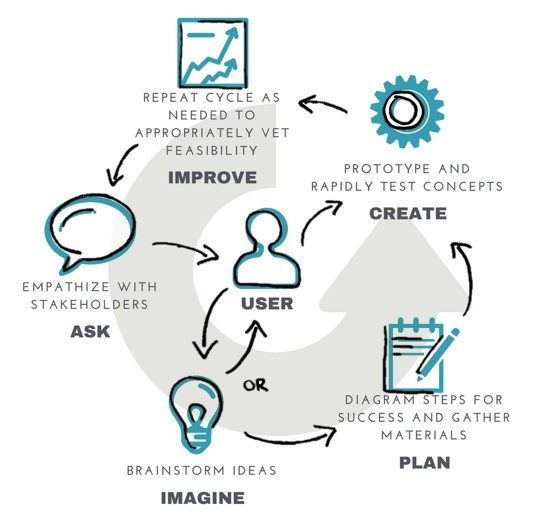
When recruiters use LinkedIn's AI to craft messages to candidates, they can see and select fields for AI to apply. LinkedIn's product development team recognized that users like being in control of AI automation, and found an approach to give recruiters a sense of control and agency. In addition, HCD gives the people you’re designing for the sense that they’re understood. Not only can this increase customer loyalty, but because they’re part of the process that brought the product to market, they’re likely to feel more invested in using it. When you cultivate empathy for your customers, as you do in HCD, you can think of products that will really improve people’s lives.
Share Knowledge, Get Respect!
It can be used to design hardware, software, services and even organizations — as long as human beings are kept at the center throughout the entire process. Human-centered design is vital because it ensures that we create solutions tailored to human needs, cultures, and societies. It is a discipline that emphasizes a people-centric approach, solving the right problems, recognizing the interconnectedness of everything, and not rushing to solutions. It involves working with multidisciplinary teams and experts, and most importantly, it has to come from the people, embracing a community-driven design approach. This approach is a subset of humanity-driven design, which aims to address the major challenges humanity faces and, ultimately, save the planet.
Upcoming courses
Are you interested in learning more about the benefits of human-centered design? Explore our seven-week Design Thinking and Innovation course, one of our entrepreneurship and innovation courses. A great example of human-centered design is a children’s toothbrush that’s still in use today. In the mid-nineties, Oral-B asked global design firm IDEO to develop a new kid’s toothbrush. Rather than replicating what was already on the market—a slim, shorter version of an adult-sized toothbrush—IDEO’s team went directly to the source; they watched children brush their teeth.
What are the 4 principles of human-centered design?
Addressing business KPIs and desired ROI is important, but at the level of in-app or on-site interaction, the focus should remain on the people using the product or service. Understanding their context and use cases are also essential to developing potential solutions that are appropriate and relevant for them and conducive to good business. Emerging trends in human-centered design are transforming how designers engage in solving problems for an increasingly diverse population.
Inclusivity involves making a product or service accessible to populations who are physically or mentally impaired. And while accessibility is a core objective, inclusion is much more than that, helping a diverse group of people use a product effectively in many different environments. Point of ViewAfter developing an understanding of human needs, the next step is to synthesize insights and define a point of view. Synthesis is the process of understanding how the insight gained through research translates into the features of a product or service. Business models across industries are experiencing a drastic transformation due to novel advancements in technology as well as human service needs.
A product design agency is a professional organization that specializes in creating and developing products for businesses and organizations. Agencies like ours are typically composed of a team of designers, engineers, and other experts who have extensive experience and knowledge in the field of product design. We use our human-centered lens to collaborate across research, design, and development to develop experiences that achieve product-led growth.
In this article, we break down what is Gestalt psychology, the seven Gestalt principles of design, and how to apply it to your Webflow website. The TBEI landing page shows family photos arranged casually, as though they’re hanging on a fridge. This design gives the impression that the community is one big loving family and encourages hesitant new visitors to reach out for support. The thoughtful microcopy on the two CTA buttons — “Find support” and “Offer support” — also communicates that this is a strong community where people offer and receive help freely. It considers the end user as an individual influenced by their social, cultural, and physical surroundings rather than someone solely navigating a user flow. Integrating human-centered design (HCD) techniques into digital design work make the results uniquely accessible, appealing, and enjoyable to use.
Motorola Solutions Summit Showcases How AI and Human-Centered Technologies Simplify and Strengthen ... - Chronicle-Tribune
Motorola Solutions Summit Showcases How AI and Human-Centered Technologies Simplify and Strengthen ....
Posted: Mon, 29 Apr 2024 16:57:44 GMT [source]
Agile is primarily a project management and product development approach that values delivering workable solutions and iterating based on customer feedback. Agile teams break projects into small, manageable chunks and work in short bursts, called "sprints," which allows for frequent reassessment and course corrections. The develop phase is when you combine and critique the ideas you’ve brainstormed to create a range of possible solutions. By combining and evaluating your ideas, you can better meet users’ needs and determine what you want to move into prototyping to reduce costs, save time, and increase your final product’s quality. The goal is to keep users’ wants, pain points, and preferences front of mind during every phase of the process. In turn, you’ll build more intuitive, accessible products that are likely to turn a higher profit because your customers have already vetted the solution and feel more invested in using it.
During this stage, it’s crucial to communicate your innovation’s value to internal and external stakeholders, including colleagues and consumers, to bring it to market successfully, encourage adoption, and maintain growth. With each answer, you’ll start to generate insights you can use to create a problem statement from your users’ perspective. The program is only available to graduate students in computer science and engineering (excluding the MAS programs), cognitive science, and public health.
Product design typically requires a mix of creative and technical skills, such as design, engineering, and user experience. Product development, on the other hand, typically requires more technical skills, such as engineering, manufacturing, and quality control. In addition to design and development, product design consulting may also involve activities such as market research, user testing, and product launch support. This can help clients to better understand their target market and ensure that their product is well-positioned for success. The Design Lab offers a specialization in human-centered design in collaboration with the Department of Computer Science and Engineering (CSE) and the Halıcıoğlu Data Science Institute (HDSI). This specialization fits with the aspirations of the university to offer cross-cutting training and opportunities for cross-pollination across the many disciplines of the campus.
Designers put ideas into action by creating low-cost experiments to test them. These experiments or prototypes can be created for physical products, virtual interfaces, processes, or systems. In any of these situations, the goal is to create something you can test with those who live with the problem in order to see if it works.
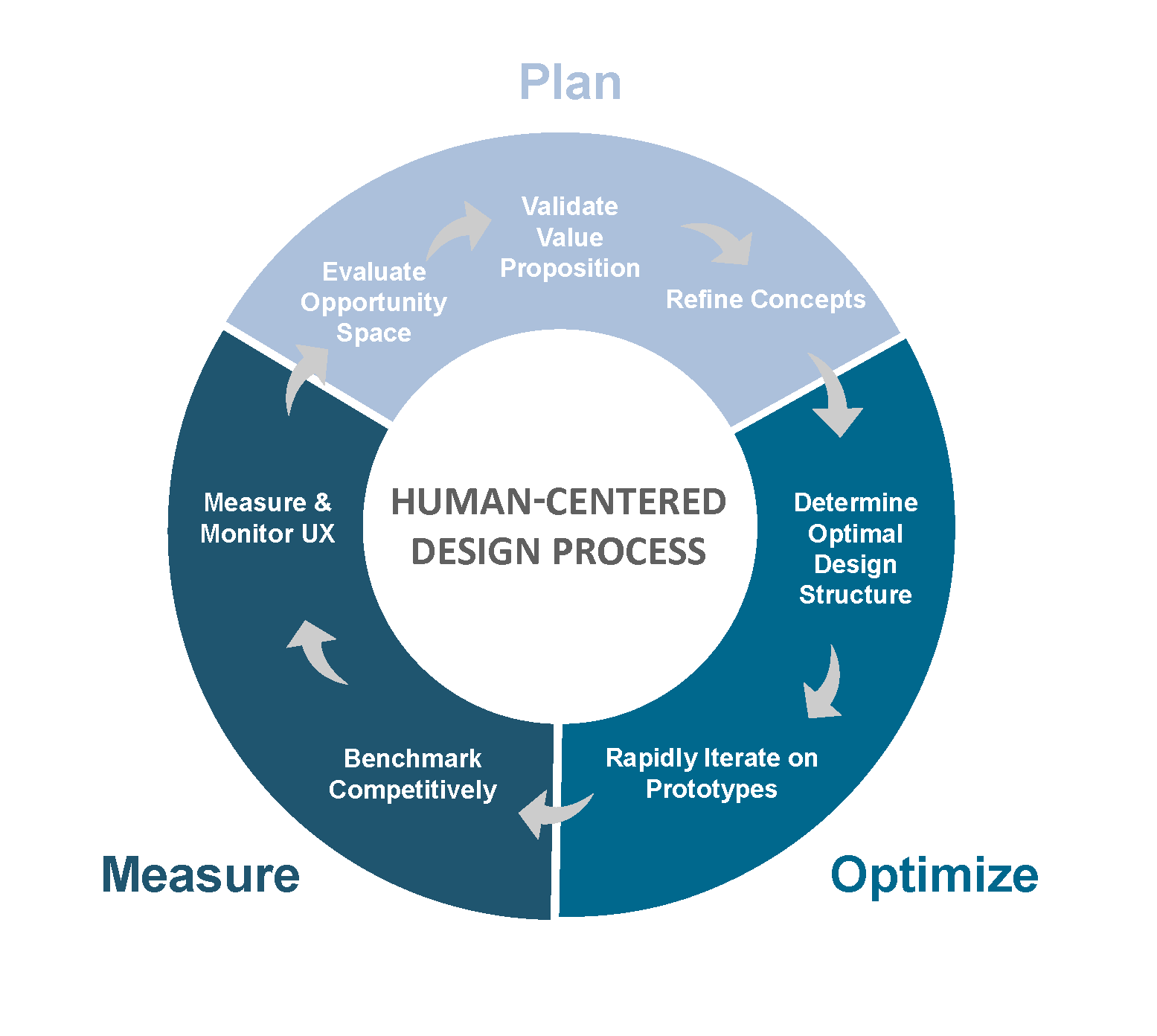
The first ones — created in the 1940s — required specialists to operate them in closed environments. By the 1980s, things had changed; A large portion of smaller computers were being used by people without specialist knowledge. The early Unix system Ed (for “Editor”), for example, did not prompt users to save their changes, causing many users to erase their work when turning off their computers. At many points in technological history, Don Norman helped designers understand their responsibility to the people who use the things they design. Great advances were made in electronics and computing throughout the second half of the 20th century. The problem was, the designers of many systems often overlooked the human limitations of the people who had to interact with them.


No comments:
Post a Comment